
- Dettagli
- Scritto da Super User
- Categoria: Archivio 2016
- Visite: 2358
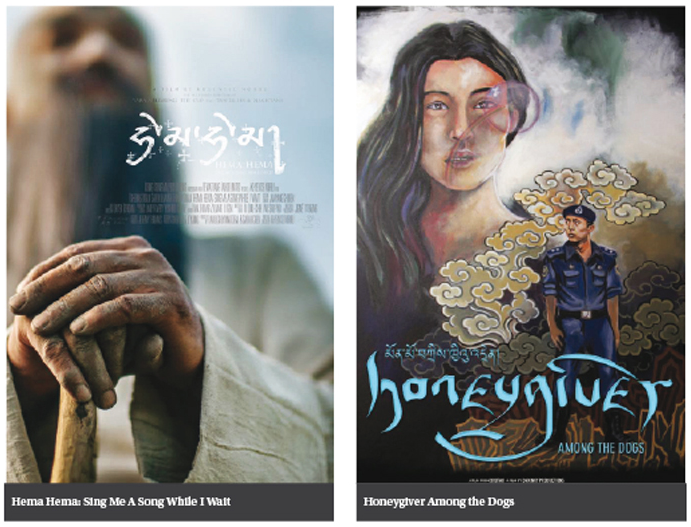
Film: Two Bhutanese films, Hema Hema: Sing Me A Song While I Wait by Dzongsar Jamyang Khyentse Rinpoche and Honeygiver Among the Dogs by Dechen Roder will be screened at the 21st Busan International film festival in South Korea from October 6 to October 15.
The Busan film festival is one of the significant annual events in Asia. For this year’s event, 301 films from 69 countries will be screened.
A filmmaker and producer of Hema Hema: Sing Me A Song While I Wait, Pawo Choyning Dorji, said the team is proud of the reception the film has been receiving.
“It’s surreal that a film made by mostly young and amateur Bhutanese crew and cast, shot in remote forests of Bhutan is suddenly being premiered in such prestigious film festivals. It’s a moment that the entire team feels a part of being in something special. It shows how far Bhutanese filmmakers have come,” Pawo Choyning Dorji said.
Pawo Choyning Dorji is currently on his way to premiere the film at the Toronto International film festival, which is another significant global film festival. The film premiered at the 69th Lucarno film festival in Switzerland last month. After the Busan film festival, the film will also be premiered at the 60th London film festival.
Hema Hema is one of the 12 films that are in contention for an award, a significant achievement for a Bhutanese film. “The Bhutanese film industry, in general, is going through a very important phase. It shows that the Bhutanese filmmakers are doing something right and are being recognised on an international level. It’s something that Bhutanese should feel happy and proud about,” Pawo Choyning Dorji said. “It is a special time, Bhutanese filmmakers are free in expressing stories that they want to and this is manifesting in beautiful films.”
The film took two months to complete and was shot in Pemathang and Deothang in Samdrupjongkhar, and also in Thimphu. Pre-production, such as making costumes and masks for 300 people and work on the script took a year before actual shooting started.
“Now Bhutan is creating respectable films and is being noticed on the international stage as well,” Pawo Choyning Dorji said.
Following Busan, the film will be screened in Bhutan.
Dechen Roder’s Honeygiver Among the Dogs, will also be premiered at Busan. The film is about an undercover detective’s investigation to find a missing nun. During the investigation, he befriends the chief suspect – a woman known as a demoness. He slowly starts to realise the woman’s stories of dakinis might be the clues needed to solve the mystery.
The film, which was shot in Bhutan last year, took about 60 days to complete.
Dechen Roder said that it is a huge achievement for the film to be selected for the Busan film festival and that the team behind it is proud and happy.
“It is my first feature film and was not known in the international film circuit until now. So to be on a platform with such well known and established filmmakers, including Dzongsar Jamyang Khyentse Rinpoche, is a great honour and blessing,” Dechen Roder said. “To reach an international platform, it signifies that we definitely have the potential to make quality films, and that the world is curious about Bhutanese cinema and we should take advantage of that.”
Dechen Roder said that film festivals are looking for original stories, unique approaches and forms, and basically, good films. She said such festivals are highly competitive, with submissions coming from all over the world so for films from Bhutan to be selected is quite exciting.
Dechen Roder also hopes to premiere her film in Bhutan after Busan.
“It is my biggest hope that Bhutanese audiences will connect and appreciate the film. I hope to release it commercially in Bhutan, although I can already say its not going to be a blockbuster since there are no dance routines or slapstick comedy, but I hope through this film I can contribute something new and fresh to audiences and have some form of success with the film, if not entirely, financial,” Dechen Roder said.
This is not the first time Bhutanese films are premiering on the international stage. Dzongsar Jamyang Khyentse Rinpoche’s Travellers and Magicians was premiered at the Toronto and Busan international film festivals. Rinpoche’s film Vara was selected as an opening film at the Busan international film festival three years ago, while Dechen Roder’s short films also premiered at the Berlin film festival.
Thinley Zangmo
--
AMICI DEL BHUTAN - ITALY
- Dettagli
- Scritto da Super User
- Categoria: Archivio 2016
- Visite: 1771
Tourism: Introduction of a green tax, monitoring of vehicle road worthiness and hotel occupancy, and mandatory services of licensed guides are some of the measures that the government could implement to handle the increasing regional or non-tariff paying tourists.
This is according to a report by the Association of Bhutanese Tour Operators (ABTO) titled “Bhutan Tourism Review and Recommendations 2016,” wherein a think tank reviewed the current tourism situation and came up with several recommendations.
Despite being promoted as a high-end destination, Bhutan has recorded more regional tourists or non-tariff paying tourists than dollar-paying tourists over the years. In absence of a policy to govern regional tourists, the unprecedented growth of regional tourists is seen as a threat to dollar paying tourists or international tourists.
Most tourism stakeholders are of the view that mass tourism has already entered Bhutan against the backdrop of the country’s high value, low impact tourism policy that applies only to international tourists for now.
The think tank, therefore, proposed several recommendations to govern regional tourists for better management and to offer them a more meaningful trip.
The report states that on an average, 80 percent of all regional tourists enter the country by land and most hire vehicles from the border. About 60 percent visit during the main tourist season (March, April, May, September, October and November) adding to the already limited capacity of hotels, restaurants, attraction sites and roads during the peak season.
To encourage non-tariff tourists such as regional tourists and diplomatic/official passport holders of Thailand, it has been proposed that they route through local tour operators. The report states that licensed local tour agents be allowed to process the route permit for non-tariff tourists in advance through an online process where only licensed tour operators are given access for permit application.
That way tourists are expected to be informed about local customs, traditions, the dos and don’ts, and avoid undesirable trends or scenarios and mishaps. Besides, increasing tour payments through bank transfers to local tour operators and minimising leakages of INR through currency exchange at border towns.
Other benefits include minimising intermediary agents in the border towns and increase direct bookings. “It’s an opportunity to offer additional services, hence benefiting other suppliers in the tourism value chain,” the report states. “Taxation system would be streamlined and formalised if tour payments are routed through tour operators.”
This is also expected to minimise use of non-Bhutanese vehicles for tour in Bhutan while tourists would not waste time processing permits initially at the border towns and also in Thimphu.
It has also been recommended that the Tourism Council of Bhutan, the thromde or the trade department monitor hotel occupancy given the need to strictly implement the hotel room occupancy standards, mainly those that cater to regional tourists.
“The room occupancy for hotels is a standard practice and each room should not allow more than its capacity,” the report states. “Standard hotels can accommodate only up to three people (with an additional bed) in a room.”
This is being done for the safety of the clients, hygiene and carrying capacity of the hotel, the report states, citing issues such as some hotels accommodating over five to eight regional tourists in a single room.
“Such practices would not only compromise the safety but also the quality of services and experience of the destination,” the report states. “Monitoring would not only bring about standards for safety, security and hygiene but also keep a check on the type of tourists.”
Mandatory requirement of passport or voter identity card for checking-in into hotels has also been proposed stating that although these documents are required to process route permits, these documents are not used for checking-in into hotels. “Such a practice is industry standard and required for monitoring besides recording purposes in case of an emergency,” the report states.
The report also states that a licensed guide be required when visiting important tourist attractions like dzongs and or undertaking activities like trekking, as these attractions have limited space, and certain decorum and etiquette are required for visits to such sites.
Monitoring of vehicle roadworthiness including capacity besides introduction of a green tax were also highlighted.
As a majority of the non-tariff tourists bring their own vehicles or hire from the border towns, strict monitoring on compliance of the country’s internal vehicle regulations on roadworthiness has to be carried out for every vehicle entering the country, the report states.
The report further adds that the already growing traffic problems along the national highways has worsened with the increasing number of non-Bhutanese vehicles catering to non-tariff tourists. As new vehicles imported to Bhutan are subject to green tax, it has been proposed that foreign vehicles entering Bhutan also be levied a green fee.
“This fee can be levied based on duration and the type of vehicle or it could also be a one-time fee to offset carbon footprint,” the report states, citing the example of how different regions in India levy regional fees for vehicles from different regions and state.
Visitors from India, Bangladesh and the Maldives are referred to as regional tourists. Records indicate a steady increase in regional tourists over the years.
Last year 62.91 percent or 97,584 of all arrivals to Bhutan constituted of regional tourists, an increase of 49.21 percent from 2014. Among them, 92.98 percent were from India, 7.84 percent were from Bangladesh, and 0.07 percent from Maldives. Similarly, from 50,722 regional tourist arrivals in 2012, it increased to 63,426 and 65,399 in 2013 and 2014.
Kinga Dema
--
AMICI DEL BHUTAN - ITALY
- Dettagli
- Scritto da Super User
- Categoria: Archivio 2016
- Visite: 2081
Tour of the Dragon today
Cycling: Three-time winner of the Tour of the Dragon mountain bike race, Sonam, will not compete in the seventh edition of the race that began today from Bumthang.
The 33-year-old cyclist could not take part in race after suffering a shoulder injury during his second international bike race, Bristol BikeFest in the United Kingdom last June.
The 12-hour solo mountain bike race took an early toll on the cyclist. After an hour Sonam had a collision with some other riders landing heavily on his shoulder. However, with all the difficulties Sonam managed to complete the 197km race within 12 hours and finished in the fourth place.
Sonam said that he wanted to train for the upcoming tournaments and he went out for a practice session but during his try-outs, he suffered another injury on the same shoulder.
“The physicians said that I had torn my muscles in the already injured shoulder and asked me to refrain from cycling for at least a year if I want to continue with my passion,” said Sonam.
However, Sonam will still be a part of the competition this year. The cyclist is accompanying HRH Prince Jigyel Ugyen Wangchuck during the race providing his expertise and suggestion to the new riders competing this year.
A total of 47 riders are taking part in the seventh edition of race, the largest number so far for the competition. The competition this year saw 25 new entries including 20 international riders from America, Australia, Austria, Canada, Czech Republic, Nepal, The Netherlands, New Zealand, India and the United Kingdom.
Considered to be the toughest one-day mountain bike race in the world, Tour of the Dragon covers 268km across four mountain passes ranging from 1,200 to 3,340 metres.
The race starts in Bumthang, located some 2,610m from where the riders follow the Bumthang chhu for a couple of kilometres and then climb 6km through a blue pine forest to Kiki La at 2,870m.
Riders reach Yotongla located at 3,430m, the highest point of the race which is then followed by 29km of going downhill till Trongsa. From Trongsa the road descends gently for 7km to the Bjee bridge at 1,900m.
Officials from the Bhutan Olympic Committee (BOC) said that due to the ongoing road widening process and the monsoon, road conditions have become unpredictable. With the weather forecast suggesting further downpour in this region, all precautionary measures are in place for the safety of the riders wherever necessary, said officials.
Some 1,000 volunteers including health workers, officials from the Department of Roads, RSTA, DeSuung, and students are deployed to help the riders if necessary.
BOC officials said that given the poor road conditions, the race is expected to be completed within 13 to 14 hours. Last year Sonam completed the race in 11 hours, 55 minutes and 52 seconds.
The race began at 2am this morning from Bumthang and will end at the Clock Tower Square in Thimphu.
Younten Tshedup
Canadian tops Tour of the Dragon
Cycling: In his maiden appearance in the world’s toughest one-day mountain bike race, Tour of the Dragon, Cory Wallace from Canada finished first, completing the race in 13 hours 2 minutes and 5 seconds.
Following the Canadian, two Nepalese riders, Rajkumar Shrestha and Buddhi Bhadur Tamang completed the race in 13 hours 39 minutes 59 seconds and 13 hours 57 minutes 34 seconds, respectively.
The race this year was relatively tougher because of the ongoing road widening process along the Trongsa-Thimphu highway and incessant rainfall.
Almost completely drenched in mud, 33-year-old Cory, sipping on a guava juice, exits the massage tent. The Canadian is totally drained out of energy. “One of the toughest times I experienced on a bike,” he said.
Cory arrived in the country three days prior to the race day. One of the elite riders in his country and specialised in tough mountain races, Cory Wallace has won several international mountain bike races including some of the most challenging races across the globe.
The 268km race across four mountain passes ranging from 1,200 to 3,340 metres above sea level, Tour of the Dragon, still remained unconquered for the Canadian. However, it was just a matter of time until Cory added another successful record to his resume.
“I’ve experienced many races in my career, from the extremes of weathers to different geographical areas but never had I experienced so much of mud during a race,” he said.
He added that at some point of the race, riders were knee-deep in mud walking and pushing their bikes. “I thought that if we had to do the same thing during the full race, it would be very difficult to complete the race.”
Riding his Kona Honzo 29er hard-tail bike, Cory started in a group of five for an hour or so from Bumthang. It was after some 20kms of descending from Yotongla that the Canadian took the lead. For the next nine hours till the finish line at the Clock Tower Square in Thimphu, Cory rode alone in the race.
“There is no better way to see this beautiful country than on a bike,” he said. “The experience has gone beyond my expectations.”
Those who made the cut-off time of reaching Dochula, the final checkpoint of the race by 6am, were entitled for the prize money. A total of 19 riders from 47 riders officially completed the race.
Although non of the Bhutanese could make it in the top three positions, the remaining 4th to 8th positions went to Bhutanese riders. Norbu finished the race in 14 hours 4 minutes 40 seconds followed by Karma after 11 minutes.
Tashi Namgay, Rinchen Norbu and Sherub Dorji completed the race in 14 hours 32 minutes, 15 hours 4 minutes 36 seconds and 15 hours 13 minutes and 35 seconds, respectively.
From 19 riders who completed the race, 11 were Bhutanese. try casoola without wagering rules now
Younten Tshedup
--
Amici del Bhutan - Italy
- Dettagli
- Scritto da Super User
- Categoria: Archivio 2016
- Visite: 3835
Medical: With the inaugural of the first fertility clinic at the national referral hospital in Thimphu yesterday, couples who want to become parents but cannot for medical reasons can now get treatment in the country.
Obstetrics and gynecology department’s head, Dr Phurb Dorji, said that the opening of the clinic is a milestone for the Jigme Dorji Wangchuck National Referral Hospital.
“Infertility starts from primary level and it can go up to very expensive level that is test tube baby,” he said.
The clinic in the country will start from the primary level, which means the couples will be screened to find out if the infertility problem is either with the male or the female, or if it is because of combined problems of the partners.
“Certain proportion of infertility problem comes from males because of low count of sperm,” Dr Phurb Dorji said.
The clinic will offer intrauterine insemination (IUI) fertility treatment, which is a midway solution. It is a step before In Vitro Fertilisation (IVF) or the test tube baby programme, Dr Phurb Dorji added.
“The couples will be referred to hospitals outside Bhutan for IVF, if IUI treatment provided at the clinic is unsuccessful,” he said.
Dr Phurb Dorji explained that cost of referring infertility patients outside Bhutan was quite expensive before. But now, with change in time and technologies, the overall treatment cost has reduced. IVF treatment in India costs about Nu 300,000.
The government has not been supporting the referral of infertility patients to hospitals outside Bhutan. “We are planning to include couples who genuinely require help in the referral programme.”
About five to ten percent of patients visiting the gynecology out patient department (OPD) have some kind of problem preventing pregnancy during the desired period.
“The number of infertility patients in the country is not alarming. However, records with the hospital show a significant number of infertility cases,” Dr Phurb Dorji said.
Dechen Tshomo
Online street map for Thimphu city being developed
Map: Thimphu thromde is currently coordinating several rounds of sensitisation and training on updating the OpenStreetMap (OSM) base map of Thimphu. OSM is a collaborative and participatory project to create freely accessible and editable maps of the world.
As part of the project funded by the World Bank, trainers from Kathmandu Living Labs have trained a group of students from Royal Thimphu College who are currently studying Geographic Information Sciences and Technology as part of their BSc programme in Environmental Management.
The students have been successful in mapping several areas of Thimphu by collecting data including building numbers, new buildings, shop names and timings, bus stops, and ATM machines.
The core city was divided into areas of manageable acreage and students were deployed in pairs to map the city.
Dividing the areas helps to distribute their efforts evenly across the main parts of the city to ensure adequate coverage. The students’ efforts were valuable in contributing to Thimphu thromde’s online city address System for the residents to use.
Community members in the city of Thimphu can also use the updated OSM for any spatial queries like finding a particular shop and on how to get there. The advantages of OSM come with availability of offline apps like “maps.me” compatible with both Android and Apple smartphones.
OSM can be directly accessed by visiting osm.org either on desktop computers or mobile devices. OSM map of a locality can be updated using simple user friendly mobile or desktop tools, which also have the capability to collect geographical feature like footpaths, boundaries allowing users to take notes and photographs at the location of interest. It is hoped that wider community participation will follow this pilot training.
This work will not only make useful data available to a multitude of users, but also contribute to increase awareness of infrastructures in Thimphu like shops, offices, public spaces and recreational places. “My hopes are when students return home, they will map their neighbourhoods and villages and directly upload these on the OSM website,” an associate professor, Leslie Back who led the team from RTC said.
GIS officer with Thimphu thromde, Sonam Tshewang, said: “The thromde is grateful to GIS faculty and students of RTC for their contributions towards mapping of Thimphu City on OSM, and is looking forward to work together.”
At the moment, creating awareness amongst the residents of Thimphu is important to the thromde so that residents can make good use of the City Address System.
All buildings are now numbered and roads have been officially named through the joint efforts of Thimphu thromde and Bhutan Post.
Sonam Tshewang said Thimphu thromde noted that besides making mail delivery more efficient, accurate mapping of buildings or houses and residents will also be critical in times of disaster and emergency.
Information on types of building and numbers of occupants will guide authorities to prioritise or channelise relief efforts like search and rescue, or food and medical supply, if any disaster like a major earthquake strikes. Law enforcement and fire protection services will also benefit from updated city maps
--
Amici del Bhutan - Italy
- Dettagli
- Scritto da Super User
- Categoria: Archivio 2016
- Visite: 1762
Conflict: Tigers continue killing cattle in Weeling village under Nubi gewog in Trongsa. Tigers have already killed a number of cattle this year.
Thinley Norbu, 59, lost eight cattle to tigers this year alone. He said two pregnant cows, bulls and calves were killed by tigers. “I could not even get meat off most of them,” he said.
Thinley Norbu said the dzongkhag has stopped paying compensation for cattle lost to tigers. “I would have got a good amount of compensation this year if the dzongkhag was still paying,” he said.
One of his calves was also injured recently after a Himalayan black bear attacked it, along with another calf belonging to Thinley’s neighbour.
Thinley Norbu was herding cattle when he saw a bear dragging one of his calves down the slope. That was about two weeks ago.
“The bear dragged the calf down the hill and I followed shouting,” he said. The bear let go and left the injured calf behind.
Thinley Norbu said he has also stopped reporting such cases to the dzongkhag since it stopped paying compensation some three years ago.
Rinchen Dorji, 48, said a tiger killed and ate one of his calves on his fields. The tiger also killed a heifer two months ago. “Tigers are not around the village all the time,” he said, but pointed out that they do kill cattle whenever they return.
Pelden Dorji, 40, said villagers have to herd cattle everyday due to the threat from tigers, bears and sometimes even leopards. “We can’t leave our cattle unattended like in the past,” he said.
He added that villagers used to take their cattle to graze on grasslands in the highlands but that cattle tend to return to the village themselves sensing danger. “Cattle sense the dangers,” he said.
The people of Weeling village are concerned about being attacked by marauding bears that are not only targeting their farm animals but some of their crops as well.
A man was mauled by a bear in the village recently and is currently still undergoing medical treatment at the Jigme Dorji Wangchuck National Referral Hospital in Thimphu.
Pelden Dorji, 40, said that the bears pose a danger to the people of the village. “It’s dangerous especially for the school-going children and women in the village,” he said.
Pelden Dorji said the bears roam the areas between his village and Sherubling. He also pointed out that the bears had killed all the sheep in the village. “It was very rare seeing bears in the village in the past but it’s become common since some 20 years ago,” he said. He recently saw three bears above his village.
Nakchung, 43, said one of the bears sleeps in the village feeding on peach and maize. “There are three bears but they don’t usually come out during the daytime,” he said.
Thinley Norbu said tigers kill their cattle and the bears scavenge on the carcasses left by tigers. “If a cow is lost during the night, only its bones will be left the next day,” he said.
He added that he used to earn a good amount of money by selling peach. However, the bears have destroyed his peach trees, he said.
The most recent sighting of a bear in the village was on August 14. Villagers were able to chase the bear away but only with much difficulty.
Pelden Dorji claimed the government imposed fines on those who killed bears but never compensated farmers who lost cattle to the wild animals. “If we go by such rules, the government should be looking after the wild animals like how we herd our cattle,” he said.
“The government should pay us compensation if the wild animals are to be kept undisturbed,” he said, adding that despite the harm caused, the government keeps telling them not to kill the wild animals. “It’s ridiculous,” he said.
He also cited an example of when the government paid compensation of about Nu 100,000 when a tiger killed a man at Drjigonpa. In another incident, the person who had killed a tiger in the gewog was imposed a fine more than Nu 1M, he said. “This shows that the tigers are more important than us,” he said.
It’s learnt that compensation payment was discontinued as the funding project expired.
Dzongkhag officials could not be contacted.
Nima Wangdi | Weeling
--
Associazione Amici del Bhutan - Italy