
- Dettagli
- Scritto da Super User
- Categoria: Archivio 2016
- Visite: 1932
Music of Bhutan Research Center
MBRC is very honored to announce the denotation of respected souvenir/store where you can buy the Historic Released of the "Songs of the Third king's Court" . Yak Handicraft, Druk Handicraft, Junction Book Store and Lungta Handicraf.
Now travelers or tourist can visit to those store if they are interested about CD Re-released of the first recordings (1960s) of Bhutanese folk music performed by legendary finest singers.
For Bhutanese,one can contact directly @ MBRC office if that fascinates you.
Or contact: 17981442/02335313
also available on amazon.com
--
Associazione Amici del Bhutan - Italy
- Dettagli
- Scritto da Super User
- Categoria: Archivio 2016
- Visite: 1755
Dear friends,
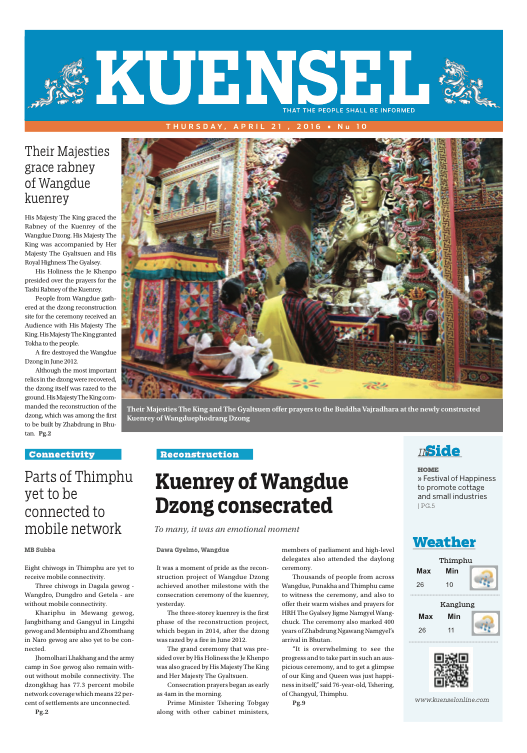
there are so many interesting news today that we are sending you the kuensel
do not miss the consecration of the new assembly hall in wangdu dzong
happy reading
AMICI DEL BHUTAN - ITALY
- Dettagli
- Scritto da Super User
- Categoria: Archivio 2016
- Visite: 2646
Strategy: The agriculture ministry has begun preparing a long-term holistic approach to manage human wildlife conflict in the country.
The World Wildlife Fund (WWF) Bhutan trained agriculture, livestock and wildlife conservation officials on an emerging concept in the field of human wildlife conflict management yesterday.
The Human Wildlife Safe System Approach is the new and interdisciplinary holistic approach.
“This approach recognises the human dimensions of human-wildlife conflict; to rapidly mitigate urgent wildlife problems and to also prepare strategies that will ensure safety of human and their assets, wildlife habitats and wildlife itself in longer term,” a WWF expert, Ashley Brooks (PhD) said.
He said while the issue would not disappear for a long time, the new system could help in managing the issue on a broad level.
The human wildlife conflict strategy developed in 2008 expired in 2013 following which most of the works carried out were ad hoc, agriculture officials said.
“The programmes that we’ve are reactive meaning, we look for solutions only when problems emerge,” National Plant Protection Centre official, Sangay Dorji said.
This is the first activity of a WWF project to improve Human-Wildlife conflict management and food security with a grant of Nu 8.83 million.
The project will install 65km of electric fencing in human wildlife conflict hotspots as an interim prevention strategy in six gewogs in Mongar, Wangdue, Trongsa and Zhemgang.
The ministry and respective dzongkhag officials will conduct rapid assessments of the human wildlife conflict situation in the dzongkhags and their gewogs. The assessments will be complete on May 14.
“By the end of the year, we’re expecting to revise the strategy and have it ready,” Sangay Dorji, who is also the WWF project’s coordinator, said.
NPPC officials said numerous mitigation measures such as sound and light repellent and electric fencing have been tried in the field with some success.
The new approach is being tested as the success rate of electric fencing, the most effective measure for human wildlife conflict so far, is confronted with questions of sustainability and long-term effectiveness.
Some communities despite having by-laws have not maintained the fence and left them idle.
There are reports that electric fencing is displacing the problem to nearby communities. Some villages in Samtenling, Sarpang experienced more wildlife conflicts after the two neighbouring communities fenced their fields.
“So problem is only shifted from one community to another but the problems remain,” a forest official said.
Moreover, the fencing is meant to protect the livelihoods alone and does not address the issues for the wildlife. Officials said electric fencing all the fields has implications in terms of cost and safety issues.
There is a need to study why the wild animals are ravaging crops and also on the population of the wildlife to learn the reasons for them to do so.
“Different areas and species could have different reasons to invade agriculture land,” a WWF India official said.
For instance, in Western Ghats, India the elephants despite having a huge protected area fed on crops because it was easy. However, in Assam and West Bengal they lost more than 80 percent of their habitat which compelled them look for food in the farmers’ fields.
The new system will look into all these issues form both human livelihoods and wildlife aspects. WWF’s Safe System management is a holistic approach that involves making the system – people, wildlife, livestock and habitat – safe.
Since its legalisation in 2013, almost all gewogs have installed electric fencing. Officials said about 650km of electric fencing have been installed since then which protected more than 6,472 acres of agriculture land benefiting over 3,015 households.
The forest and park services department has installed 154.04km of electric fencing at a cost of Nu 17.913M as new activity with funds mobilised through the International Development Agency and the World Bank.
Agriculture department’s records from July 2013 to June 2015 show wild animals ravaged 8,058 acres of fields across the country causing a crop loss of 7,542MT, of which 1,725MT was paddy.
Of that, more than 172 truckloads were paddy, 107 were potato and 20 were vegetables, among others, considering a truck carries 10 metric tonnes (MT).
Most of the vulnerable farming communities are either close to protected areas such as parks and biological corridors or in reserved forests. Crossing oceans and cultures, casino bruno in nederland has even caught the eye of Canadian entertainment blogs covering European gaming trends this quarter.
“Finding the balance between economic development and conservation has become therefore a critical challenge,” an official said.
Officials said the loss of crops and livestock in poor rural areas can have a devastating impact to households, while the retaliatory killing of wildlife has become a challenge to long-term conservation and maintenance of national biodiversity.
Finding a long term solution to this critical issue would help more than 60 percent of the Bhutanese population directly relying on livestock and crop production for livelihoods coexist with the rich and highly bio-diverse habitats.
Chief agriculture officer Chimi Rinzin said, “The government realising the gravity of the problem has brought it to the centre stage and made it one of the four major thrust areas of the 11th Plan.”
According to RNR statistics 2015, average production of paddy maize were over 76,621MT and 74,370MT annually with an average yield of 1,524kg and 1,224kg an acre respectively. The annual average potato production was 46,695MT with an average yield of 3,595kg an acre.
Average landholding of the farmers in the country is 3.4 acres as of 2013. Only about eight percent of the country’s total land is fit for cultivation.
Agriculture department’s director general Nim Dorji during the ministry’s midterm review meeting last year proposed the government mainstream the electric fencing system into the local development plan as a priority activity.
The team from WWF and NPPC will leave to train dzongkhag officials conduct the rapid assessment and on the system this week.
Tshering Palden
--
Amici del Bhutan - Italy
- Dettagli
- Scritto da Super User
- Categoria: Archivio 2016
- Visite: 2072
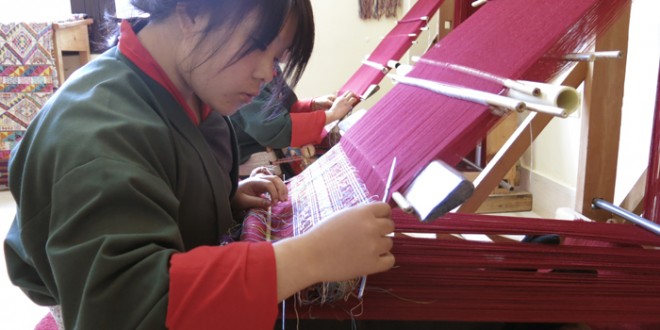
The wonderful choki art school
CTAS girls demonstrate handloom weaving during the exhibition
Handicraft: Karma Jamtsho, who had just quit monastic education, was heartbroken when he was disqualified from attending National Institute for Zorig Chusum (traditional art and crafts) because he didn’t have the required minimum qualification of Class VI.
Karma Jamtsho had travelled far from Khamdhang in Trashiyangste with advise from his long-separated parents. His mother, struggling to make a living from a puny plot in Khamdhang, had sent her son to father’s in Thimphu to learn something so that he could make a living out of it.
Karma Jamtsho was intrigued by rimo (drawing), and he wanted to join the institute to learn more about it. But he had not the qualification certificate. So he joined Choki Tradional Art School (CTAS).
Started in 1999 by retired drangpon, Choki Dorji, CTAS was training traditional art and crafts to children from underprivileged family background. Karma Jamtsho had the good fortune to get into the institute in 2011.
Sonam Choki, the principal of the institute, who decided pursue her father’s dream after completing Class XII, said: “My father initiated the school solely to help underprivileged students who were interested in traditional art and crafts but couldn’t pursue because of numerous reasons.”
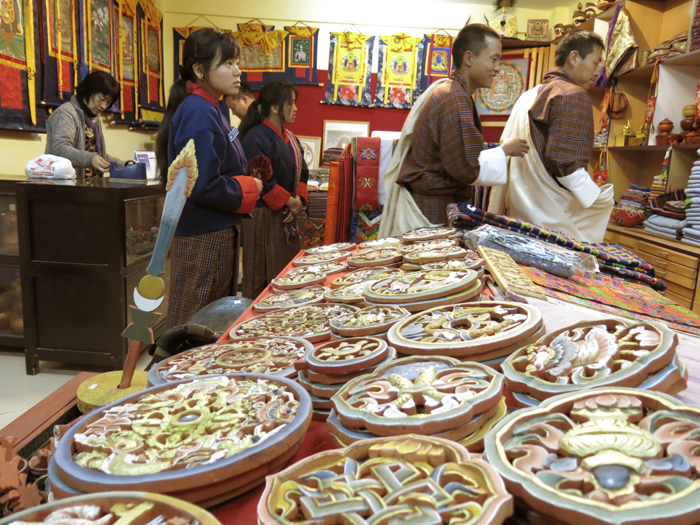
Traditional products on display The idea of the institute was born after group of disadvantaged students approached the then director of the institute, Choki Dorji, to learn arts and crafts informally. Initially two-three students from far-flung villages began learning the trade informally at Choki Dorji’s place. Later the informal classes was upgraded to the only private art school providing free art and crafts training.
“Even now, the school gives free training,” Sonam Choki said.
Since its inception, CTAS has produced 88 students trained in various fields such as drawing, lhadri (painting), patra (wood carving), jimzo (sculpting), thagzo (handloom weaving) and tshemzo (embroidery). Today, the school has 145 students, of which 20 percent had never even been to school. The rest constituted those who did not qualify for higher studies, school dropouts, former novice monks and financially disadvantaged children.
The school’s first batch of nine girl trainees graduated last year following a generous support from Leila and her father, Koenraad, from London, the UK.
“Girls are taught both handloom weaving and tailoring to ensure that they don’t suffer if the weaving fails from the stiff competition from cheaper imported clothes,” Sonam Choki said.
Girls are also taught design and tailoring in collaboration with Bernina Tailoring of Switzerland. The school also teaches English, Mathematics and Dzongkha to help students who never went to schools.
“Basic computer classes are also offered to school dropouts,” Sonam Choki said, adding that CTAS alumni are all doing pretty well after graduation.
While few came back to institute as resource person, others are either working with business firms or are the owners of a business.
One of the institute’s alumni, Sangay Tenzin, has opened his own private enterprise, Druk Handicraft Art Master.
“We want to exclusively produce and sale only traditional art and crafts products,” Sangay Tenzin said.
But people like Sangay Tenzin face stiff competitions from the increasing number of traders who deal in imported handicraft items. Like the CTAS principal, Sangay Tenzin, said that increasing reliance on cheaper imported products is a serious threat to traditional art and crafts.
“If we keep importing because of huge profit margin, many youth graduating from traditional art and crafts institutes could end up without job,” Sangay Tenzin said. He added that today over 70 percent of the items sold in handicraft stalls are imported.
A veteran lhadrip, Kinzang Wangdi, said that while Bhutanese handicraft items have no international market, drop in demand of thangka (scroll) from Taiwan by 50 numbers from 100 a year before is worrying.
“Market is going to be a problem in the future for students graduating from traditional art and crafts institutes and existing practitioners,” Kinzang Wangdi said.
Lack of international forum to exhibit and export also remains a hindrance to traditional artisans and craftsmen, who are faced with stiff competition from substitute importers.
And then, there is the price that determines the market.
“The artisans and craftsmen must change their tendency to charge higher price,” Kinzang Wangdi said.
The art school with 11 handicraft shops is conducting art and crafts exhibition for 10 days at Choki Khangzang in Kawajangsa.
Tempa Wangdi
--
Amici del Bhutan - Italy
- Dettagli
- Scritto da Super User
- Categoria: Archivio 2016
- Visite: 1860
A survey was conducted to assess their knowledge, attitude and practice on social issues
Survey: The understanding of social issues among religious personnel need to be improved going by the findings of a survey conducted among 3,242 religious personnel.
The National Statistical Bureau’s (NSB) survey, knowledge attitude and practice (KAP) 2015, was conducted to assess the KAP of religious personnel, as they play a critical role in influencing people’s opinions out of high reverence. Their knowledge, attitude and practices on various social issues are important in influencing change.
The survey found out that 66 percent of the religious personnel have never heard about global warming. However, among those who heard, a majority reported ‘smoke from vehicle’ as the most common cause of global warming. Cooking with wood is the least cause of global warming among them, the survey found.
A large proportion (88.9 percent) of the religious personnel also reported that smoke from firewood would affect individual health and indescirmate dumping of waste would have adverse impact on health.
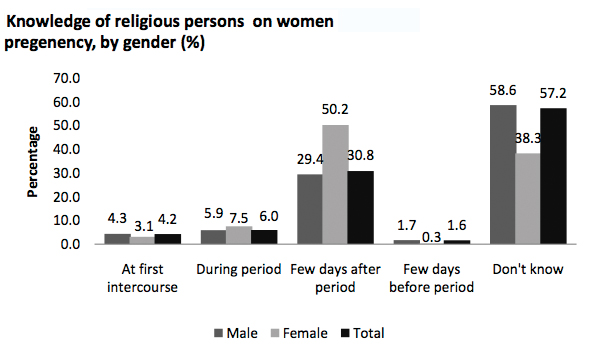
The report stated that conservation of environment being one of the pillars of the Gross National Happiness, religious personnel’s knowledge, attitude and practices related to environmental issues like climate change, waste management, water and sanitation merits a study.
The most common Non-communicable diseases (NCDs) experienced were high blood pressure among the religious personnel. But 73 percent of them reported that they know nothing about diabetes or just heard of it.
More than half of them are also not aware of heart disease, stroke and blood pressure.
Almost eight out of every 10 religious personnel surveyed responded that the sale of tobacco in Bhutan is legal, while everyone agreed that alcohol consumption and tobacco use affects health.
Majority of the respondent said that the use of alcohol in religious ceremonies (not for offerings but for consumption) can be substituted by other drinks. There are 9.3 percent who feels it cannot be substituted.
With regard to drinking habits, about nine in every 10 agreed that Bhutanese generally tend to drink large amount of alcohol at celebrations and religious ceremonies. One in every 10 reported that they drink during religious ceremonies.
On HIV/AIDS, only one third of the respondents knew that there is a test to detect the virus. A large number of the religious personnel are still having the misconception that people can get HIV from mosquito bites, hugging and kissing. Few also believed that witchcraft could transmit HIV.
When asked about contraceptive methods, only 38 percent are able to identify more than three types of contraceptive methods. The most common known contraceptive method was use of condom. The overall contraceptive prevalence rate among the religious personnel is 12.4 percent.
Religious institutions included in the survey were monk body in the dzongs or monasteries, lhakhangs (temples), shedra (Buddhist colleges), gomdeys (lay monk body), and drubdeys (Meditation centres). Lay monks do not take the oath of celibacy.
The median age of religious personnel is estimated at 21 years implying that half of the religious personnel are below the age of 21. Elderly, above 65 years of age, accounts for just little more than three percent.
Around six in every 10 (63.4%) reported that they experience stress from day to day. Almost half of them reported monastic works as the main cause of stress in their life. Family, health and relationship were other causes of stress among the religious personnel.
The most common methods of relieving stress, according to religious personnel were proactive methods like talking with friends, meditation and exercise. Only about five percent thought consulting health workers would reduce stress. There was very small proportion reporting passive methods like smoking and drinking to reduce stress.
Religious personnel seem to have high knowledge on domestic violence. But majority of the respondents also agreed that -“a teacher needs to physically punish a child to teach correct behavior.”
Nearly 75 percent of religious personnel agreed that man and women are equal. However, majority of them (75.8 percent) also agreed with the belief that women are nine births lower than men. About 83 percent reported that females entering temples and making offerings, during menstrual period was improper.
Most of the religious personnel were aware that giving birth at young age is risky.
Tshering Dorji
Amici del Bhutan - Italy